There is a widespread disillusionment with our prevailing economic paradigm, a sense of fatigue emanating from the many concurrent crises and market failures experienced during the very first decade of the new millennium, including especially the financial and economic crisis of 2008.
At the same time, we have seen increasing evidence of a way forward, a new economic paradigm – one in which material wealth is not delivered perforce at the expense of growing environmental risks, ecological scarcities and social disparities.
The fuel price shock of 2008, and a related flare up in food and commodity prices, both indicate structural weaknesses and risks which remain unresolved. Rising demand, forecast by the International Energy Agency (IEA) and others, suggests an ongoing dependence on oil and other fossil fuels and much higher energy prices as the world economy struggles to recover and grow.
As regards to food security, we are seeing neither widespread understanding of the nature of the problem, nor globally collaborative solutions for how we shall feed a population of 9 billion by 2050. Freshwater scarcity is already a global problem, and forecasts suggest a growing gap by 2030 between annual freshwater demand and renewable supply.
Collectively, these crises are severely impacting our ability to sustain prosperity worldwide and to achieve the Millennium Development Goals (MDGs) for reducing extreme poverty. They are compounding persistent social problems from job losses, socio-economic insecurity and poverty, and threatening social stability.
Although the causes of these crises vary, at a fundamental level they all share a common feature: the gross misallocation of capital. During the last two decades, much capital was poured into property, fossil fuels and structured financial assets with embedded derivatives, but relatively little in comparison was invested in renewable energy, energy efficiency, public transportation, sustainable agriculture, ecosystem and biodiversity protection, and land and water conservation.
Hence, UNEP defines a green economy as one that results in improved human well-being and social equity, while significantly reducing environmental risks and ecological scarcities. In its simplest expression, a green economy can be thought of as one which is low carbon, resource efficient and socially inclusive.
Investments need to be targeted to rebuild natural capital as a critical economic asset and as a source of public benefits, especially for poor people whose livelihoods and security depend on nature.
Persistent poverty is the most visible form of social inequity, related as it is to unequal access to education, healthcare, credit availability, income opportunity and secure property rights. A key feature of a green economy is that it seeks to provide diverse opportunities for economic development and poverty alleviation without liquidating or eroding a country’s natural assets. This is particularly necessary in low-income countries, where ecosystem goods and services are a large component of the livelihoods of poor rural communities and ecosystems and their services provide a safety net against natural disasters and economic shocks.
Greening agriculture in developing countries, concentrating on smallholders, can reduce poverty while investing in the natural capital on which the poor depend. There are an estimated 525 million small farms in the world, 404 million of which operate on less than two hectares of land. Greening the small farm sector through promotion and dissemination of sustainable practices could be the most effective way to make more food available to the poor and hungry, reduce poverty, increase carbon sequestration and access growing international markets for green products.
Renewable energy can play a cost-effective role in a strategy to eliminate energy poverty. The move towards a green economy aims to increase access to services and infrastructure as a means of alleviating poverty and improving overall quality of life, and addressing energy poverty is a very important part of this transition. Renewable energy technologies and supportive energy policies promise to make a significant contribution to improving living standards and health in low-income areas, particularly in off-grid situations.
Cost effective solutions include also clean biomass and off-grid solar photovoltaics, with low operating costs and flexible, small-scale deployment options.
The central challenge, however, as we transition to a resource and carbon-constrained world, is to decouple growth absolutely from material and energy intensity. There is abundant evidence that the global economy still has untapped opportunities to produce wealth using less material and energy resources.
*Excerpts from United Nations Environment Programme, 2011



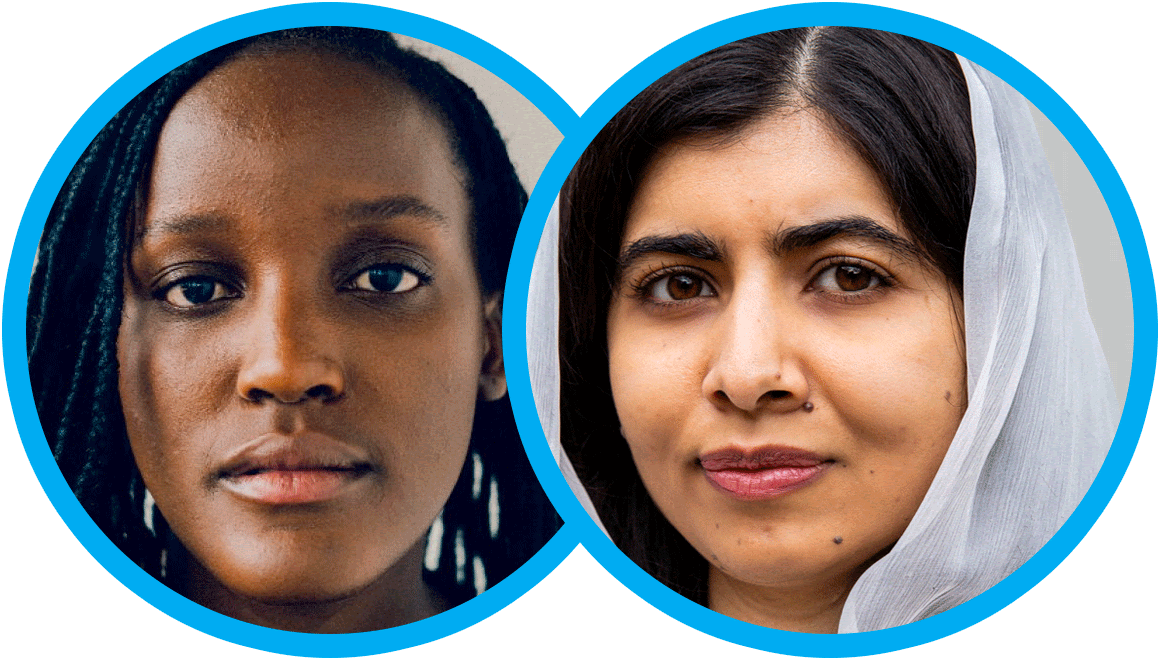 Nous venons de signer cette lettre ouverte pour demander aux chefs d’Etat et de gouvernement de faire de l’école gratuite pour tous les enfants un droit humain universel.


Wow! Thank you! I constantly wanted to write on my site something like that. Can I include a part of your post to my blog?
Yes, please, proceed with using the info and sharing it.
I am glad you are interested in this question because it is important that we should reduce our reliance on non-renewable resources. Future generations will not thank us for wasting such resources.Coal and oil are examples of non-renewable energy sources. They are fossil fuels obtained from the ground and were created millions of years ago during a phase in the earth’s development that is over. So as we use these resources less is available for the future. Furthermore burning fossil fuels creates pollution.Solar panels and wind mills are examples of renewable resources because collecting such energy has little or no impact on its availability for the future.But it may be worth pointing out that the term renewable is confusing. What we really mean is sustainable .Best wishes for a more sustainable future.
It¡¦s in reality a great and useful piece of information. I am glad that you shared this useful information with us. Please keep us up to date like this. Thank you for sharing.
I’m not certain the location you might be getting your data, but excellent topic. I need to spend some time learning more or understanding more. Thanks for magnificent data I used to be in search of this data for my mission.
I was examining some of your content material on this internet web site and I believe this internet site is rattling instructive! Keep putting up.
Some genuinely nice and utilitarian info on this web web site , likewise I think the layout has amazing capabilities.